
The set design of a production ultimately brings the story to life and encourages the audience to engage and interact with it. the details that make up the background of the story also contribute heavily to its overall emotional tone.
Production/Set designers are responsible rot the visual concept of a film, TV or theatre
production. They identify a design style for sets, locations, graphics, props, lighting, camera angels and costumes, while working closely with the director and producer.
TV/Film - ones the concept is decided, designers usually appoint and manage an art department, which includes a design and construction team.
Theatre - the designer will work with an in house set team or it will be contracted out to a set company - this will be arranged by the producer or production manager.
The designers will make regular visits to see progress of the set being built.
They often form a strong partnership with a particular director, who they will then work with on many productions.
Designers tend to specialize in film, television, or theatre, although there's some overlap. In the theatre, production designers are also called stage or set designers.
Responsibilities
- reading scripts to identify factors indicating a particular visual style
- considering the production brief which may be written or given orally
- meeting the producer and director to discuss concepts and production requirements
- researching art history, background politics, historical information and producing design ideas
- planning and monitoring the design budget
- providing scale drawings, designs or models
- identifying and assessing potential studios and locations
- sourcing appropriate materials
- presenting ideas to others involved in the production
- hiring and managing an art or costume department team or teams
Set Design
Job roles and Interrelations
The set designer, also known as the scenic designer, is responsible for designing the scenery — and more broadly, the artificial environment — in which a stage, television, or film performance takes place. Interrelates with costume designer, lighting designer, director, set constructor.
Scenic constructors build all of the scenery for theatre, film and television. Working primarily with wood, metal and plastics, scenic constructors utilise a range of technical and creative skills to design imaginative solutions to problems. Interrelate with set designer, costume designer, directorr.
The Scenic Draughtsperson will take briefs from a client to create 3D/2D drawings for a given project, the brief may be in the form of architectural drawings, a sketch up model or other more basic creative artwork. Interrelates with set designer, director, set constructor.
The art department is responsible for creating the overall visual look of a television show or film in collaboration with the director. An art department is supervised by the production designer, who manages the various sub-departments
Scenic artists paint backdrops, murals and prop pieces for theatre, TV and film productions. They take the designs and ideas provided by a production or set designer and create the set pieces, which could be anything from a cityscape to a wall decorated in period style.
The Set Dresser prepares a set with props and furniture to give it correct appearance and make sure each item is in correct position for each performance. Interrelates with set designer, director.
Hard and Soft skills
Hard skills
Constructing/modeling skills
CAD knowledge
SD knowledge
Skills of working with hand tools and machinery
Soft skills
Communication
Team/individual work
Imagination
Creativity
Critical thinking
Hand Tools and Machinery
Hand saws are simply any type of saws that are powered by the force of the user, rather than being powered by electricity, battery, or gas. These saws are common in a variety of trades, with many of them being suitable for a wide range of tasks around the home and garden as well. The benefit of these saws is that they are easily portable, take up very little storage space, and are more inexpensive than power saws. However, they typically take longer to finish a job than a powered equivalent, so they may be most suitable for smaller tasks.
Hack saw Coping saw Cross cut saw

The hack saw was created to cut through metal, and due to its thin blade, it works well to cut through thin materials such as plastic or metal pipes.

For fine precision work, sawing wood and plastics. Interchangeable blades with 360° turntable. It is used for making curved cuts on wood.

This saw is used for making rough cuts of wood and is designed to cut across the grain of the wood (i.e., perpendicular to the grain). These saws have large teeth and a relatively thick blade to make it sturdy against rough wood.
Hammers and Mallets
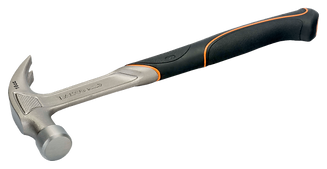
Like a hammer, the mallet is also used for hitting objects. One of their main differences is that mallets have only one head and are commonly made of wood or rubber. Since a mallet is made of softer material unlike the metallic hammer, it is used to hit something more gently and not crush or dent the surface

A chisel is a cutting tool with a sharpened edge at the end of a metal blade, used — often by driving with a mallet or hammer. For wood.

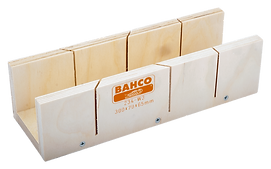
A mitre box is a guide for cutting a wood working appliance used to guide a hand saw for making precise cuts, usually 45° mitre cuts.various angles.
An adjustable bevel is an adjustable gauge for setting and transferring angles. Different from the square, which is fixed and can only set a 90° angle, the sliding T bevel can set any angle and transfer it on another piece.

PPE AND COSHH

In Set Design, we use PPE to protect ourselves during using hand tools and machinery.
Googles are used to protect eyes from wood dust or other dangerous things that can get into them.
As all machinery makes loud noises you may need hearing protectors.
Gloves are useful when you work with things from COSHH cupboard and wood so you don't hurt skin on your hands.
Masks are used during interacting with wood and liquids that contain toxic ingredients so you won't inhale any hazardous things.
Foot protection is used when you need to work with heavy parts so nothing will fall on you foot.

Control of Substances Hazardous to Health
States general requirements imposed on employers to protect employees and other persons from the hazards of substances used at work by risk assessment, control of exposure, health surveillance and incident planning.
Jigsaws are best used for cutting shapes and curves in wood with its narrow blade, which is attached to the tool's body by a spring-loaded clamp at the front. The blade's sharp teeth are measured in TPI, or teeth per inch. A higher TPI gives a smoother cut that requires less sanding.
Morticer is used for producing square holes and tenons with the slot produced from overlapping the square holes. Similar in action to a pedestal drill, with a lever pulling down the cutter. This action also operates a micro switch and starts the machine


Pillar drills (also referred to as drill press machines) are versatile machines that can be used on a wide range of materials where single hole drilling is required. The head is lowered vertically and plunges into the material by means of a hand lever and the table can be adjusted to suit varying sizes of material.

The bandsaw is useful for cutting stock to size and roughing out shapes. It contains a serrated blade that forms one continuous loop. The blade is stretched over two pulleys, the upper one idle, the lower one driven by a variable speed electric motor.

A bandfacer is essentially used for “finishing”, therefore the majority of material required to be removed from a workpiece should be removed using other machine tools or hand/power tools.

Chop saws can be used for cutting lumber, moulding, decking, aluminum and other non-ferrous metals, provided the width and depth cooperate with the size restrictions of the saw. Material too wide for your chop saw can be cut with a circular saw.

What is CAD?
Computer-aided design (CAD) is the use of computers to aid in the creation, modification, analysis, or optimization of a design. This software is used to increase the productivity of the designer, improve the quality of design, improve communications through documentation, and to create a database for manufacturing. Designs made through CAD software are helpful in protecting products and inventions when used in patent applications. CAD output is often in the form of electronic files for print, machining, or other manufacturing operations. The terms computer-aided drafting (CAD) and computer aided design and drafting (CADD) are also used.
Advantages:
• CAD allows experts to create more accurate design representations.
• replaced manual design drafting, allowing design development, alteration and optimization.
• enables engineers to craft more precise designs and manipulate them virtually.
• CAD software calculates how multiple materials relate.
Disadvantages:
• Work can be lost because of the sudden breakdown of computers.
• Work is prone to viruses.
• Work could be easily “hacked”
• Time taking process to know how to operate or run the software.
• High production or purchasing cost for new systems.
• Time and cost of training the staff which will work on it.
Practicing for box building
We were given the task of making boxes for a future Holocaust performance so that the actors could interact with them on stage. To begin with, we were divided into groups and given the task of sketching the frame of the box. Counting the number of beams for the frame, we realized that we needed to make 4 pieces of 60 cm and 8 pieces of 51 centimeters. We were given large beams and with the help of a teacher with a circular saw, we sawed them into the right pieces. Then, following the sketch, we began to make a frame. First we had to drill holes for the screws with a drill. Each beam had to be fixed with two screws on each side. After the work with the drill is completed, you can alternately connect the beams. First we made two side frames. Then to one of them we added the remaining 4 beams of 51 cm each. All that remained was to connect the remaining frame with an almost finished structure. Then we had to measure the height and width of each side to make the sides of the box. With the help of a teacher with a hole saw, we sawed a large piece of chipboard into the parts we needed. After that, holes had to be made on two of them so that the actors could take them. Having measured the same distance on two walls, we made oval holes using a drill with a round nozzle and an openwork saw. It remains only to sand them with sandpaper. Later, without our participation, the walls were connected to the frame and the finished boxes were painted white.


Why do designers make model boxes and scale drawings?
• Scale models allow designers to make changes at a much lower cost
• A great model also provides the scenic designer with the chance to test out the physicality and logistics of the space, providing the chance to play with creative opportunities while also working out the problem areas.
• Can work out camera angles and lighting opportunities
• Give the whole production team an overall picture of what it will be
like
Scale Drawing/Model making
A good scenic design scale model is a way to get a feel for the way the space looks and to previsualize the ways the performers will potentially move about within the space as the plot demands. A great model also provides the scenic designer with the chance to test out the physicality and logistics of the space from a godlike “big picture” perspective, providing the chance to play with creative opportunities while also working out the kinks.
Designers need to consider...
• Where and when is the story set?
• Who are the characters?
• What is the story that is being told?
• Should the set be realistic, based on actual places or buildings?
• Is the world of the show imaginary, set in a fantasy place?
• Should the design be abstract, based more on a mood or atmosphere than a specific place?
• Does the show involve dance or physical theatre, and if so, how will the performers move around the set?
• Does the show need to tour to different theatres, and if so, how can the set be adapted to fit in different theatres?
Scale drawings need to include
• All entrances and exits
• All scenic elements that will need to be built for production
• All moving elements necessary to the design, along with actual demonstrations of how that motion will work. (Which pieces will need to be flown in? Rolled off?)
• All major furnishings.
Who will use these drawings?
• Workshop – to build the set
• Production Manager to manage the process
• Stage Management – to mark up the rehearsal room
• Stage crew – for the fit up
• Director and actors – as a visual aid in the rehearsal room • LX and sound designers
• Also used if the show tours to overlay onto theatre plans to check it fits!
Who will use the MODEL BOXES?
• Workshop departments – to build the set
• All art departments in planning and preproduction • Director and actors – as a visual aid
• LX and sound designers
• Director of photography
How is a model box made?
• Often, the designer will first create a “white card” model – a preliminary version
of the model box without colour created, as the name suggests, using white card.
• The final model box will be in full colour, and may use all sorts of different materials. The basic construction is usually card and foamboard, but cloth and fabric, wire and plastic or wooden models may all be used, depending on the requirements of the production.
• It’s important to use as much detail as possible, including all of the furniture that will be used, and model actors that you can “walk through” the set.
How do I consider the role of the scenic painter within my set design?
JOB ROLE AND RESPONSIBILITIES
They must at one moment be intuitive creative painters, capable of precise fine artwork, and at the next moment, speedy and pragmatic decorators. They must be capable of big physical work and meticulous touches. Rebecca Ashley, Head of Scenic Art is responsible for all the paint work, artwork and texturing on our productions at home, abroad and on tour. This often means working simultaneously on several shows. Our workshop is one of the only theatre paint- shops which works on both props and scenery. Sets for our thrust stages can be quite minimal and props have become more complex, so painting props can occupy most of the Paint Shop's team's time. RSC
Paint application techniques
• Scumble: To wet-blend two or more colours together using multiple brushes.
• Spatter: To spray small dots of paint onto a surface by flicking the paint of the ends of the bristles.
• Dry brush: To drag a nearly dry brush across the surface of a base colour in order to leave a series of streaks of paint along the surface.
• Stipple: Using the blunt ends of the bristles of a brush to stamp colour onto a surface to provide visual texture.
• Rag roll: Using a length of cloth dipped into paint and wrung out to roll across a painted surface to apply a roving line. Especially useful for marble and stone effects.
• Paint layers (coats): Applying multiple layers of paint are applied to a surface
• Prime coat: A layer intended to seal the surface of the object and provide a uniform surface for the base coat.
• Base coat: The foundational coat for the intended technique, it should match the hue and value of the finished product.
• Texture coat: A thick coat of paint, plaster or other medium applied to add a three-dimensional texture to a surface.
• Top coat: A final coat, usually clear or lightly tinted, to add a sheen to the finished technique.
Colour Terminology
Hue: A colour or the qualities that differentiate one colour from another.
Saturation: Relative percentage of a hue within a colour mixture.
Value: The relative lightness or darkness of a colour.
Tint: A high-value colour achieved by adding white pigment or light.
Tone: A medium-value colour achieved by adding black and white, or by mixing it with its’ complementary hue.
Shade: A low-value colour achieved by adding several hues or black.